
Intermatic Manual Timer: A Comprehensive Guide
Intermatic timers offer reliable control for various applications, from lighting to appliances, simplifying automation and energy management within homes and commercial spaces․
This guide details installation, programming, troubleshooting, and specific model information, ensuring users maximize the benefits of their Intermatic timer systems․
Understanding Intermatic Timers
Intermatic timers represent a cornerstone of automated control, offering solutions for both residential and commercial applications․ These devices allow users to schedule electrical operations, enhancing convenience, security, and energy efficiency․ Understanding the core functionality of Intermatic timers is crucial for effective implementation․
Essentially, these timers function as electronically controlled switches, turning devices on or off at pre-determined times․ They eliminate the need for manual operation, providing a “set it and forget it” approach to managing electrical loads․ From controlling landscape lighting and holiday decorations to regulating HVAC systems and irrigation, Intermatic timers offer versatile solutions․
The popularity of Intermatic stems from their reliability, ease of use, and diverse range of models catering to different needs․ Whether it’s a simple mechanical timer or a sophisticated digital programmable unit, Intermatic provides options for various levels of control and customization․ Proper understanding of these features is key to unlocking their full potential․
What is an Intermatic Manual Timer?
An Intermatic manual timer is an electromechanical or digital device designed to control electrical circuits based on pre-set schedules․ Unlike smart timers connected to networks, manual timers require direct user input for programming and adjustments․ They are a dependable solution for automating tasks without the complexities of modern connectivity․
These timers operate by physically switching a circuit on or off at specified times․ Mechanical timers utilize rotating dials and pins to create these schedules, while digital timers employ electronic controls and LCD displays for more precise programming․ Both types offer a straightforward method for automating lighting, appliances, and other electrical devices․
Intermatic’s manual timers are valued for their simplicity, reliability, and affordability․ They are ideal for applications where remote control or advanced features aren’t necessary, providing a cost-effective and user-friendly automation solution․ They remain a popular choice for basic scheduling needs․
Types of Intermatic Timers
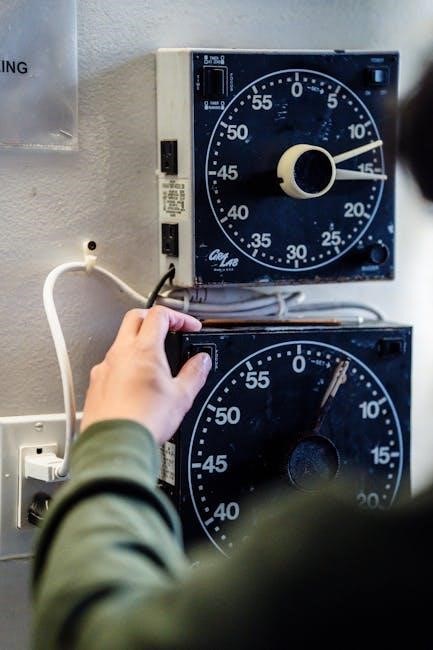
Intermatic offers a diverse range of manual timers catering to various needs․ Mechanical Timers, the traditional option, utilize a rotating dial with pins to define on/off cycles․ They are robust, require no power to maintain settings, and are ideal for simple, repetitive schedules․
Digital Timers provide enhanced precision and flexibility․ Featuring LCD displays and electronic controls, they allow for more complex programming, including multiple on/off events per day and different schedules for each day of the week․ Models like the DT122K are plug-in, offering easy installation․
Wireless Timers, such as the PE700 series, combine the convenience of digital programming with remote control capabilities․ These timers use radio frequency (RF) technology to communicate with remote controls, enabling adjustments from a distance․ They are suitable for applications where accessibility is limited․
Mechanical Timers
Intermatic mechanical timers represent a classic approach to time-based control, prized for their simplicity and reliability․ These timers operate using a rotating dial, typically with a 24-hour or 12-hour timeframe, and utilize pins or sliders to designate “on” periods․ They require no electrical power to maintain the programmed schedule, making them ideal for applications where power outages are frequent․
Their robust construction ensures longevity, and they are particularly well-suited for basic, repetitive tasks like controlling outdoor lighting or irrigation systems․ Setting a mechanical timer involves physically positioning the pins around the dial, defining the desired on/off cycles․ While lacking the advanced features of digital models, their straightforward operation and affordability make them a popular choice․
Digital Timers
Intermatic digital timers offer enhanced precision and flexibility compared to mechanical counterparts․ Featuring a digital display and button-based controls, these timers allow for precise programming of on/off schedules, often down to the minute․ Many models support multiple programs, enabling customized schedules for different days of the week or specific events․
Digital timers often include features like manual override, allowing temporary control without disrupting the programmed schedule, and battery backup to retain settings during power outages․ Models like the DT122K are plug-in types, offering easy installation, while others, such as the ST01/EI600, are designed for in-wall mounting․ Their advanced capabilities make them suitable for complex lighting schemes, appliance control, and energy-saving initiatives․
Wireless Timers
Intermatic wireless timers provide convenient control without the need for extensive wiring, making them ideal for retrofit applications or locations where running wires is difficult․ These timers typically consist of a receiver unit plugged into an outlet and a remote control for programming and operation․ The ETW Series exemplifies this technology, often integrating with smart home systems for remote access and control․

Wireless models offer similar programming capabilities to digital timers, including multiple on/off schedules and override functions․ However, they add the benefit of portability and ease of use․ A key consideration is the signal range, typically up to 100 feet, and potential interference from other wireless devices․ They are well-suited for controlling outdoor lighting, holiday decorations, or appliances in hard-to-reach areas․

Installation of Intermatic Timers
Proper installation is crucial for safe and reliable operation; always prioritize safety precautions and consult wiring diagrams for specific Intermatic timer models․
Safety Precautions
Before commencing any installation, disconnect power at the circuit breaker or fuse box to prevent electrical shock․ Always verify the power is off using a non-contact voltage tester․ Incorrect wiring can lead to fire hazards or damage to the timer and connected devices․
Ensure the timer is installed in a dry location, protected from the elements, and within the specified temperature range․ Do not install near flammable materials or sources of excessive heat․ If installing an in-wall timer, confirm the wall is structurally sound and capable of supporting the timer’s weight․

Use appropriately sized wiring and connectors, adhering to local electrical codes․ Never overload the timer’s electrical capacity․ If you are unfamiliar with electrical wiring, consult a qualified electrician for assistance․ Always read and understand the manufacturer’s instructions before beginning installation․
Wiring Diagrams for Common Models
Intermatic timers utilize varying wiring configurations depending on the model․ The ST01/EI600 in-wall timer typically requires connecting Line (Hot), Neutral, Load, and Ground wires, often involving a common wire for 3-way switch setups – ensuring distances don’t exceed 100 feet․
For the DT122K digital plug-in timer, installation is straightforward: simply plug the timer into a standard outlet and connect the load to the timer’s receptacle․ The ET1700 Series 7-Day Digital Timer, when hardwired, necessitates similar connections to the ST01/EI600, but may include additional wires for advanced features․
Always refer to the specific wiring diagram included with your timer model․ Incorrect wiring can damage the timer or create a safety hazard․ Consult a qualified electrician if you are unsure about any aspect of the wiring process․ Diagrams illustrate proper connections for optimal functionality․
ST01/EI600 In-Wall Timer Wiring
The Intermatic ST01/EI600 in-wall timer wiring involves connecting Line (Hot – usually black), Neutral (usually white), Load (the device you’re controlling), and Ground (green or bare copper) wires․ For standard operation, the Line and Neutral wires connect to the timer’s input terminals, while the Load wire connects to the output․ Ground wire must be securely connected for safety․
If utilizing a 3-way switch setup, a common wire is crucial, but the distance between the timer and the remote switch must not exceed 100 feet․ Proper identification of the common wire is essential․ Incorrect wiring can prevent the timer from functioning correctly or create a potential hazard․
Always disconnect power at the breaker before beginning any wiring․ Refer to the detailed wiring diagram included with the timer for precise terminal locations and connections․ When in doubt, consult a qualified electrician․
DT122K Digital Plug-in Timer Wiring
The Intermatic DT122K digital plug-in timer is designed for simple installation․ It directly plugs into a standard electrical outlet, eliminating the need for hardwiring․ However, understanding the timer’s plug configuration is vital․ The timer features a standard three-prong plug for connecting to the outlet, and a receptacle for plugging in the device you wish to control․
Ensure the outlet is properly grounded and meets the electrical requirements of the connected device․ The DT122K is typically used for lamps, fans, or other small appliances․ Avoid overloading the timer by exceeding its maximum wattage rating, which is usually indicated on the device itself․
Before plugging in the timer, verify the voltage compatibility․ Always disconnect power before inserting or removing devices from the timer’s receptacle․ Simple and straightforward, the DT122K offers convenient timing control․
ET1700 Series 7-Day Digital Timer Wiring
The Intermatic ET1700 Series 7-Day Digital Timer requires more involved wiring as it’s typically an in-wall installation․ It replaces a standard light switch, necessitating careful attention to wiring connections․ Typically, you’ll encounter three wires: Line (hot), Load, and Neutral․ The Line wire connects to the power source, while the Load wire goes to the fixture being controlled․
A ground wire is also crucial for safety․ Always disconnect power at the breaker before commencing any wiring․ Follow the wiring diagram provided with the timer meticulously, as incorrect connections can cause damage or create a safety hazard․ Use wire connectors to securely join the wires․
Ensure all connections are tight and that no bare wire is exposed․ Proper grounding is essential for safe operation․ Consult a qualified electrician if you are uncomfortable with electrical wiring․
Mounting Instructions
Proper mounting ensures the longevity and reliable operation of your Intermatic timer․ For in-wall timers like the ST01/EI600 or ET1700 series, carefully remove the existing switch plate and switch․ Secure the timer base to the electrical box using the provided screws, ensuring it sits flush against the wall․ Be cautious not to overtighten, which could damage the box or timer․
Plug-in timers, such as the DT122K, require no mounting; they simply plug directly into a standard electrical outlet․ Wireless timers may include mounting options using screws or adhesive strips, depending on the model․ Always verify the mounting surface is clean and dry before applying adhesive․ Ensure adequate ventilation around the timer to prevent overheating․
Double-check the timer is securely fastened before restoring power and proceeding with programming․

Programming Intermatic Timers
Intermatic timers offer diverse programming options, ranging from simple fixed schedules to complex 7-day configurations, easily customized to fit individual needs and preferences․
Basic Programming Concepts
Intermatic timer programming revolves around establishing precise ON and OFF cycles for connected devices․ Understanding these core concepts is crucial for effective operation․ Most models, whether mechanical or digital, utilize a similar logic: defining start times and durations for activation․
For mechanical timers, this involves physically adjusting dials or pins to correspond with desired time slots․ Digital timers, however, offer greater flexibility through button controls and LCD displays․ Key terms include “ON time” (when the device is powered) and “OFF time” (when it’s deactivated)․

Many Intermatic timers support multiple ON/OFF cycles within a 24-hour period, allowing for complex scheduling․ The override function temporarily bypasses programmed settings, providing manual control when needed․ Familiarizing yourself with these fundamental principles will streamline the programming process and unlock the full potential of your Intermatic timer․
Setting the Current Time and Date
Accurate time and date settings are fundamental for proper Intermatic timer operation, especially for digital models․ Begin by locating the “Time Set” or similar button, often requiring a small tool like a pen to access․ Enter the current hour and minute, paying attention to AM/PM indicators․ Some models feature a 24-hour clock option․
Date setting procedures vary; some timers automatically synchronize, while others require manual input of month, day, and year․ Refer to your specific model’s manual for detailed instructions․ Incorrect time settings will cause programmed events to occur at the wrong times, defeating the purpose of automation․
After setting, verify the displayed time and date against a reliable source․ Regularly check these settings, particularly after power outages, to ensure continued accuracy and reliable performance of your Intermatic timer․
Programming ON/OFF Schedules
Intermatic timers excel at automating on/off cycles․ For basic scheduling, define specific times for devices to activate and deactivate․ Digital timers often utilize a user-friendly interface for setting multiple on/off events throughout the day or week․ Mechanical timers require physically adjusting the dial to cover or uncover time segments, representing on/off periods․
7-day programmable schedules offer maximum flexibility, allowing unique settings for each day of the week․ Consider your routine when creating schedules; for example, setting outdoor lights to turn on at dusk and off at dawn․ Utilize the override function for temporary adjustments without disrupting the programmed schedule․
Carefully review your programmed schedule to ensure it aligns with your desired automation goals․ Regularly check and adjust schedules as needed to optimize energy savings and convenience․
Fixed ON/OFF Programming (ST01C)
The Intermatic ST01C timer offers a straightforward fixed ON/OFF programming method, ideal for simple automation needs․ This involves setting a single on-time and a single off-time, which repeats daily․ To program, first, set the current time and date accurately․ Then, use the timer’s controls to specify the desired on-time – the moment you want the connected device to activate․
Next, program the off-time, indicating when the device should turn off․ The timer will then consistently switch the device on at the set on-time and off at the programmed off-time, every day․ This is perfect for applications like landscape lighting or basic appliance control․
Remember to verify the settings after programming to ensure they match your intended schedule․ This method provides a reliable, set-it-and-forget-it automation solution․
7-Day Programmable Schedules
Intermatic timers, like the ET1700 series, excel with their 7-day programmable schedules, offering granular control over your devices․ This feature allows you to customize on/off times differently for each day of the week, accommodating varied routines․ Programming involves setting multiple on and off events per day, tailoring the schedule to your specific needs․
Access the programming mode and navigate through each day, inputting the desired on and off times․ You can create unique schedules for weekdays versus weekends, or even individual schedules for each day․ This flexibility is ideal for applications like irrigation systems or complex lighting setups․
Carefully review the programmed schedule for each day to ensure accuracy․ Save the settings, and the timer will automatically follow the 7-day schedule, providing automated control․
Using the Override Function
Intermatic timers often include an override function, providing temporary control without disrupting the programmed schedule․ This feature is invaluable when unexpected events require immediate adjustments to your automated settings․ The override typically allows you to manually turn the connected device on or off, bypassing the scheduled program․
Activation methods vary by model, but commonly involve a dedicated “Override” button or a menu option․ Once activated, the device operates according to the override setting until either deactivated or the next scheduled event․ It’s crucial to remember that the override is temporary; the timer will revert to its programmed schedule after a specified duration or manual deactivation․
Utilize the override function for short-term needs, ensuring your long-term automation remains intact․

Troubleshooting Common Issues
Intermatic timer problems like power failures, incorrect time displays, or programming errors can occur․ Addressing these promptly ensures continued, reliable operation of your automated systems․
Timer Not Turning On
If your Intermatic timer fails to power on, several factors could be at play․ First, verify the power source; ensure the circuit breaker hasn’t tripped or the outlet is functioning correctly with another device․ Check all wiring connections, confirming they are secure and haven’t loosened over time – a loose wire is a common culprit․
Inspect the timer itself for any visible damage, such as a blown fuse (if applicable to the model)․ For in-wall timers like the ST01/EI600, confirm the switch controlling the power to the timer is in the ‘ON’ position․ With plug-in timers like the DT122K, ensure it’s firmly inserted into a working outlet․
Consider if the timer is in a manual override mode, potentially disabling scheduled operations․ Resetting the timer to its factory defaults can sometimes resolve unexplained issues, though this will erase existing programming․ If the problem persists, consult the specific model’s manual for further troubleshooting steps or contact Intermatic support․
Incorrect Time Display
An inaccurate time display on your Intermatic timer can disrupt programmed schedules․ First, confirm the timer’s battery (if equipped) isn’t depleted, as a low battery can cause time drift or reset the clock․ Review the instructions for setting the current time and date, ensuring you’ve followed the correct procedure for your specific model – the ST01/EI600 and ET1700 series have distinct setting methods․
Verify you’ve selected the correct time zone and daylight saving time settings․ Some Intermatic timers automatically adjust for daylight saving, while others require manual updates․ Check for any interference from nearby electronic devices that might disrupt the timer’s internal clock․
If the display remains incorrect after these steps, try resetting the timer to its factory defaults and re-entering the time and date․ Consult the model’s manual for specific reset instructions․ If issues persist, contact Intermatic customer support for assistance, providing the model number for targeted troubleshooting․
Programming Errors
Programming errors on an Intermatic timer can lead to unexpected operation or failure to activate․ Double-check each programmed ON/OFF time, ensuring correct AM/PM settings and day selections․ For fixed schedules (like the ST01C), verify the intended operation mode is correctly chosen․ With 7-day programmable models (ET1700 series), confirm that each day’s schedule aligns with your requirements․
Review the override function; accidental activation can cause deviations from the programmed schedule․ Ensure you’ve saved all changes after making adjustments․ Refer to the manual for specific programming sequences for your model, as procedures vary significantly․
If errors persist, try clearing the entire program and re-entering the schedule from scratch․ Consider a factory reset as a last resort, but note this will erase all settings․ Contact Intermatic support if problems continue, providing details about the error and your timer model․
Wireless Timer Connectivity Problems
Wireless Intermatic timers, like the PE700 series, can experience connectivity issues hindering remote control or scheduling․ Ensure the remote and timer are within the specified range – typically not exceeding 100 feet, and free from significant obstructions like walls․ Check the batteries in both the timer and the remote control, replacing them if low․
Interference from other wireless devices can disrupt the signal; try relocating the timer or remote away from potential sources․ Confirm proper pairing between the remote and timer, following the manufacturer’s instructions for re-pairing if necessary․ Avoid placing the timer in enclosed metal cabinets, as these can block the wireless signal․
If problems persist, consult the Intermatic manual for troubleshooting steps specific to your model․ Contact Intermatic support for assistance if you cannot resolve the connectivity issues․

Specific Intermatic Timer Models
Intermatic offers diverse timers like the PE700, ST01/EI600, DT122K, and ET1700 series, each designed for unique applications and offering varied programming capabilities․
Intermatic PE700 Series

The Intermatic PE700 Series represents a leap forward in wireless timer technology, offering convenient control of lighting, fans, and other electrical devices․ These timers are particularly noted for their effortless setup and programming capabilities, streamlining the automation process for users․ A key feature is compatibility with the Intermatic ETW Series Smart Timer, enhancing smart home integration․
These wireless timers eliminate the need for complex wiring, making installation straightforward․ Users can easily program on/off schedules to automate their environments, saving energy and increasing security․ The PE700 series is ideal for both indoor and outdoor applications, providing reliable performance in various conditions․ Setting up the PE700 involves pairing the timer with a receiver, and then configuring the desired schedules through a user-friendly interface․
The series is designed for ease of use, even for those unfamiliar with timer programming․ Detailed instructions and resources are readily available to guide users through the setup and operation of these versatile timers․
Intermatic ST01/EI600
The Intermatic ST01/EI600 in-wall digital timer is a popular choice for automating lighting and appliance control within residential and commercial settings․ This timer offers both standard and programmable modes, providing flexibility to suit diverse user needs․ Setting up the ST01/EI600 in standard mode is remarkably simple, allowing for quick, fixed on/off scheduling․
For more complex requirements, the 7-day programmable function enables customized schedules tailored to specific daily routines․ Installation involves careful wiring, adhering to safety precautions, and utilizing appropriate wiring diagrams․ The ST01/EI600 is designed for easy integration into existing electrical systems, offering a seamless automation solution․
Comprehensive manuals provide detailed instructions for installation, setup, operation, and maintenance, ensuring users can effectively utilize all the features of this versatile timer․ It’s a reliable and efficient solution for energy management and enhanced convenience․
Intermatic DT122K
The Intermatic DT122K Digital Plug-in Timer is a convenient and user-friendly solution for controlling lamps, fans, and other small appliances․ Its plug-in design eliminates the need for complex wiring, making it ideal for renters or those seeking a temporary automation solution․ Step-by-step video tutorials are readily available, guiding users through the setup and programming process with ease․
Programming the DT122K is straightforward, allowing for multiple on/off settings throughout the day․ This timer is perfect for automating holiday lights, aquarium equipment, or any device requiring scheduled operation․ Its compact size and simple interface make it accessible to users of all technical skill levels․
The DT122K offers a cost-effective way to enhance home security and energy efficiency, providing peace of mind and reducing energy consumption․ It’s a versatile tool for automating everyday tasks․
Intermatic ET1700 Series
The Intermatic ET1700 Series 7-Day Digital Timer offers advanced programming capabilities for comprehensive control of lighting, appliances, and HVAC systems․ This in-wall timer provides a robust and reliable solution for automating schedules, enhancing energy savings, and improving home security․ Detailed video tutorials demonstrate how to set up and program the ET1700, making the process accessible for both beginners and experienced users․
Featuring a 7-day programmable schedule, the ET1700 allows for customized settings for each day of the week, accommodating varied routines and preferences․ Its override function provides temporary control, while maintaining the programmed schedule․ The timer’s clear display and intuitive interface simplify operation․
The ET1700 Series is a versatile choice for automating various applications, offering convenience and efficiency for homeowners and businesses alike․